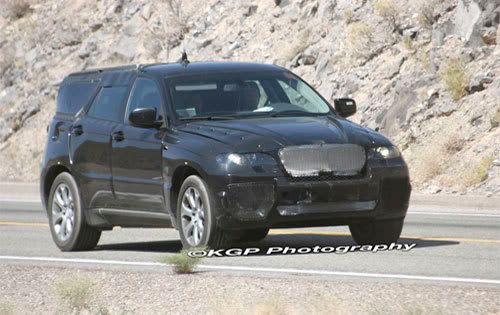
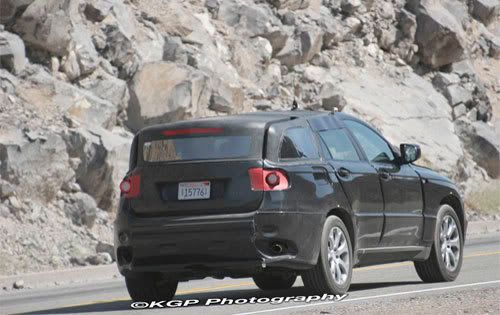
The previous Chrysler Sebring wasn't sold in Europe because Chrysler thought it would sell slow and the fact it was too big to compete with other mid-sized family cars, but that didn't stop hundreds of imports coming into the UK. Now it's here, has it been worth the wait?
Well, kind of. While the Sebring looks great, engine refinement, high price, poor quality interior materials & driving dynamics and running costs let the side down....big time. On the brighter side, the Sebring is comfortable and it has a 2.0 TDi 140bhp Volkswagen engine up front.
Chrysler's hopes to rival the Ford Mondeo, Vauxhall/Opel Vectra, Toyota Avensis, Skoda Superb, Mazda6, Peugeot 407, Citroen C5, Volkswagen Passat and Honda Accord has fallen flat on it's face. At most, the Sebring can only rival budget family sedans like the Hyundai Sonata, Kia Magentis and Chevrolet Epica. Why? If Chrysler had paid more attention to the interior quality, driving dynamics and refinement, the Sebring would be a much better all-rounder.
Performance:
The engine range kicks of with a 2.0 litre petrol, which is the fastest in the range. It is refined but plenty of revving is needed to get the best out of it and there's a lack of punch for overtaking. Mated to this engine is a 5 speed manual gearbox.
The flagship 2.4 litre petrol engine is mated to a 4 speed automatic. With 167bhp at its disposal, it's the most powerful Sebring but it's also the most uneconomical with a combined fuel economy figure of 32mpg.
Unsurprisingly, the most popular engine will be the 2.0 CRD which is linked to a 6 speed manual gearbox. This noisy unit, especially on start up offers strong in-gear performance. Although paper figures suggest 12 seconds are needed until it hits 62mph, it feels very quick and urgent in everyday driving. Combined fuel economy is quoted at 46mpg with CO2 emissions of 170g/km. Most rivals offer more power, refinement, better fuel economy and lower CO2 emissions.
Handling:
Out on faster roads, the Sebring is relatively comfortable, however, on bumpy roads the Sebring feels very unsettled and vibrations through the cabin are evident. The virtually non-existent feel from the steering makes for an extremely dull to drive on twisty roads. In addition, if you take a sharp corner, there is plenty of body roll, making the Sebring flounder.
Refinement:
On smooth, straight roads the Sebring ride quality is so-so. Another negative is the lack of refinement you get from its competitors. There's so much wind, road and engine noise at higher speeds that the Sebring is far from relaxing. While the seats are alittle firm, they are fairly comfortable on longer journeys. Front cabin space is good but it's in the rear your passengers will suffer. Despite measuring in excess of 4.8 metres, the Sebring feels poorly packaged. There's not much in the way of legroom and kneeroom for two adults, however, headroom is generous all-round.
Practicality:
Strangely, there is only one practical body-style on offer (the other is a convertible). The boot is fairly roomy at 441 litres, but the opening and the actual boot itself isn't particularly wide. Up front, you get a fold-flat front passenger's seat and at the back, you get 60:40 split-folding seats. One of the two compartments in the centre console storage bin has a power outlet. All doors have big pockets for maps and further items can be carried in a pocket at the back of the driver’s seat.
Equipment:
This is where the Sebring scores well. Despite only one trim-level available, you get wood/leather steering wheel w/ reach and rake adjustment, auto-dimming rear-view mirror, leather gear knob and seats, electrically adjustable driver's seat w/ heated front seats, ESP, front & rear fog lights, automatic headlamps, 18" alloy wheels, electrically adjustable heated mirrors, steering wheel mounted audio controls, x4 electric windows, x6 airbags, air conditioning and a heated/cooled front cupholder. Options include metallic paint and a sat nav.
Interior:
With its pebble grain instrument panel, glossy tortoise-shell inserts and metallic strips, the interior of the Sebring looks very nice and different, however, the quality is awful and there are rough edges and evidence of a poor finish everywhere. Shallow windows and a thick side window pillar impair visibility.
Reliability:
Many of the Sebring's mechanicals and electrical components are shared with other Chrysler Group products and it has a reliable VW diesel engine under its bonnet, the Sebring is expected to offer decent reliability.
Residuals:
As a second hand buy, the Sebring makes more sense than new. It comes well equipped with air conditioning, electric seats and leather upholstery as standard but that's not enough to make up for the poor quality and finish. There aren't many around so at least makes a different choice from the normal family saloons.
Pros:
Well, kind of. While the Sebring looks great, engine refinement, high price, poor quality interior materials & driving dynamics and running costs let the side down....big time. On the brighter side, the Sebring is comfortable and it has a 2.0 TDi 140bhp Volkswagen engine up front.
Chrysler's hopes to rival the Ford Mondeo, Vauxhall/Opel Vectra, Toyota Avensis, Skoda Superb, Mazda6, Peugeot 407, Citroen C5, Volkswagen Passat and Honda Accord has fallen flat on it's face. At most, the Sebring can only rival budget family sedans like the Hyundai Sonata, Kia Magentis and Chevrolet Epica. Why? If Chrysler had paid more attention to the interior quality, driving dynamics and refinement, the Sebring would be a much better all-rounder.
Performance:
The engine range kicks of with a 2.0 litre petrol, which is the fastest in the range. It is refined but plenty of revving is needed to get the best out of it and there's a lack of punch for overtaking. Mated to this engine is a 5 speed manual gearbox.
The flagship 2.4 litre petrol engine is mated to a 4 speed automatic. With 167bhp at its disposal, it's the most powerful Sebring but it's also the most uneconomical with a combined fuel economy figure of 32mpg.
Unsurprisingly, the most popular engine will be the 2.0 CRD which is linked to a 6 speed manual gearbox. This noisy unit, especially on start up offers strong in-gear performance. Although paper figures suggest 12 seconds are needed until it hits 62mph, it feels very quick and urgent in everyday driving. Combined fuel economy is quoted at 46mpg with CO2 emissions of 170g/km. Most rivals offer more power, refinement, better fuel economy and lower CO2 emissions.
Handling:
Out on faster roads, the Sebring is relatively comfortable, however, on bumpy roads the Sebring feels very unsettled and vibrations through the cabin are evident. The virtually non-existent feel from the steering makes for an extremely dull to drive on twisty roads. In addition, if you take a sharp corner, there is plenty of body roll, making the Sebring flounder.
Refinement:
On smooth, straight roads the Sebring ride quality is so-so. Another negative is the lack of refinement you get from its competitors. There's so much wind, road and engine noise at higher speeds that the Sebring is far from relaxing. While the seats are alittle firm, they are fairly comfortable on longer journeys. Front cabin space is good but it's in the rear your passengers will suffer. Despite measuring in excess of 4.8 metres, the Sebring feels poorly packaged. There's not much in the way of legroom and kneeroom for two adults, however, headroom is generous all-round.
Practicality:
Strangely, there is only one practical body-style on offer (the other is a convertible). The boot is fairly roomy at 441 litres, but the opening and the actual boot itself isn't particularly wide. Up front, you get a fold-flat front passenger's seat and at the back, you get 60:40 split-folding seats. One of the two compartments in the centre console storage bin has a power outlet. All doors have big pockets for maps and further items can be carried in a pocket at the back of the driver’s seat.
Equipment:
This is where the Sebring scores well. Despite only one trim-level available, you get wood/leather steering wheel w/ reach and rake adjustment, auto-dimming rear-view mirror, leather gear knob and seats, electrically adjustable driver's seat w/ heated front seats, ESP, front & rear fog lights, automatic headlamps, 18" alloy wheels, electrically adjustable heated mirrors, steering wheel mounted audio controls, x4 electric windows, x6 airbags, air conditioning and a heated/cooled front cupholder. Options include metallic paint and a sat nav.
Interior:
With its pebble grain instrument panel, glossy tortoise-shell inserts and metallic strips, the interior of the Sebring looks very nice and different, however, the quality is awful and there are rough edges and evidence of a poor finish everywhere. Shallow windows and a thick side window pillar impair visibility.
Reliability:
Many of the Sebring's mechanicals and electrical components are shared with other Chrysler Group products and it has a reliable VW diesel engine under its bonnet, the Sebring is expected to offer decent reliability.
Residuals:
As a second hand buy, the Sebring makes more sense than new. It comes well equipped with air conditioning, electric seats and leather upholstery as standard but that's not enough to make up for the poor quality and finish. There aren't many around so at least makes a different choice from the normal family saloons.
Pros:
Comfortable
Well laid out centre console
Unique exterior styling
Cheaper than rivals
Cons:
Poor rear leg/knee room
Poor interior packaging
Only one trim-level
Limited options/accessories available